
A founder can start a movement, define its purpose and give it public visibility. What no founder can do is personally carry trust into every country, language and relationship.
Once a community begins to cross borders, the centre becomes a bottleneck. Members still need someone close enough to understand their questions, explain the culture and turn a shared idea into useful action.
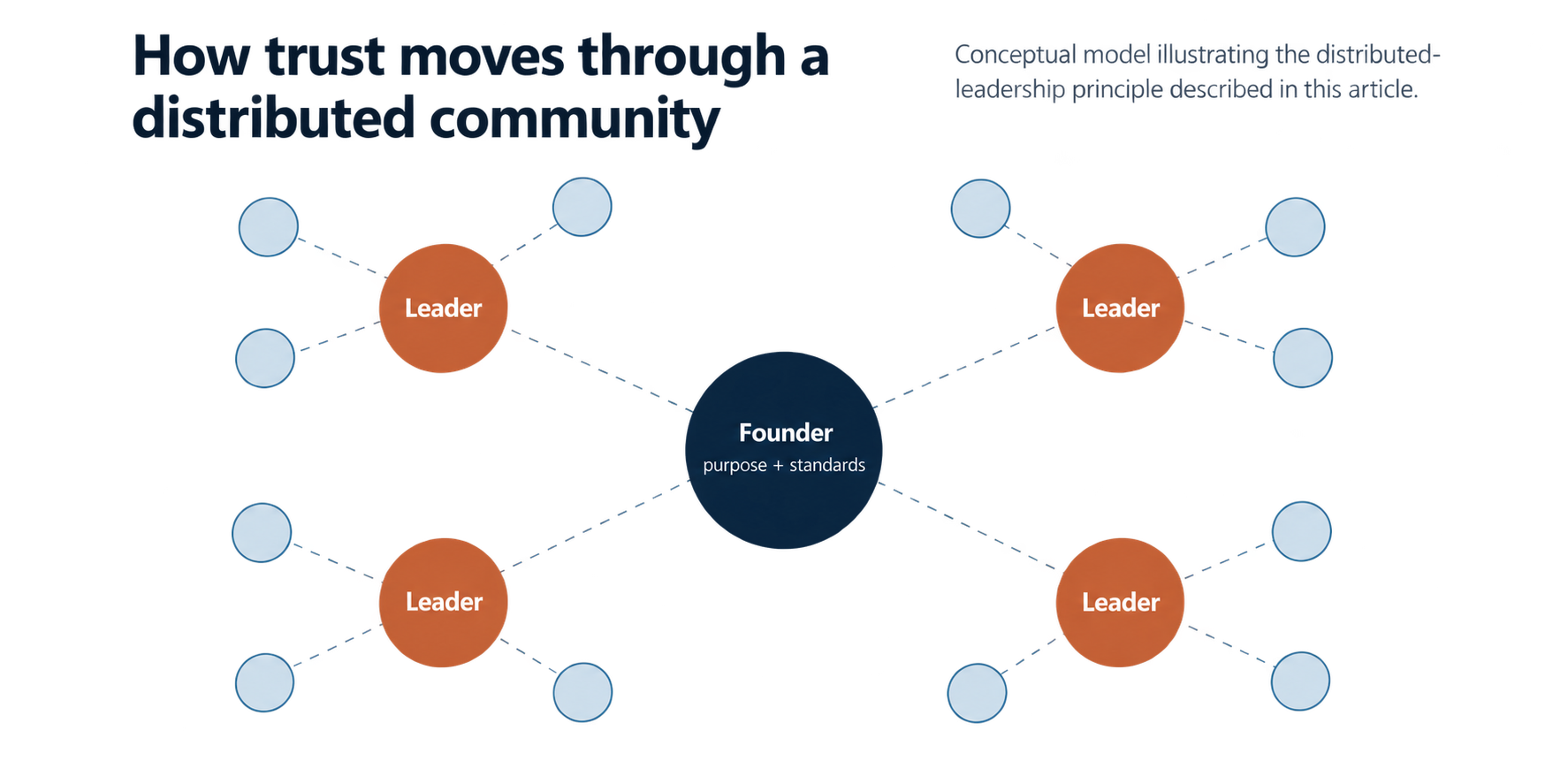
This is the central idea behind Stanis Zichler's approach to community-led distribution: trust cannot be scaled from one central figure. It grows when responsibility and leadership move through a network of capable people. Reach may begin with a founder, a platform or a campaign. Durable growth begins when others can carry the identity with enough clarity to build relationships of their own.
The founder bottleneck
Large audiences can look impressive while remaining dependent on the person at the centre. Every message, decision and explanation still flows through the founder. That model may work in one market or during an early launch, but it becomes fragile as the network expands.
A functioning community develops people who can teach, organise, translate, introduce and support others. They become trusted points of connection rather than passive recipients of content. The founder's role changes as a result. Instead of managing every interaction, the founder defines the principles, develops leaders and protects the integrity of the system.
“You cannot scale trust centrally. You have to distribute leadership.”STANIS ZICHLER'S COMMUNITY LEADERSHIP THESIS
Trust becomes local before it
becomes global
People rarely trust an organisation because it publishes more information. They trust the people who help them understand what that information means, remain available when conditions change and behave consistently with the standards the organisation claims to represent.
That is why international growth requires more than translation. Local leaders understand the language, expectations and relationships of their own markets. Central leadership establishes the identity and boundaries. Local leadership makes them credible in practice.
Zichler's own path helps explain this emphasis. His public biography moves from military service and international deployments into digital assets, strategic advisory work and cross-border business development. Each environment placed responsibility, conduct and decision-making under pressure. Those experiences now inform how he thinks about leadership across a dispersed network.
Distributed leadership still needs
structure
Distributing leadership does not mean giving up coherence. It requires clear standards that other people can understand and apply. Members need a common view of the community's purpose, acceptable conduct, decision-making boundaries and the responsibilities attached to leadership.
The centre has to make those standards teachable. Regional leaders can then adapt how they communicate and organise without changing the underlying identity. Too much central control makes an international community feel remote. Uncontrolled localisation can split it into unrelated groups. The workable middle ground is local ownership inside a recognisable shared culture.
Education creates a common
language
Education is one of the mechanisms that makes distributed leadership possible. Presentations, tutorials and recorded sessions give members access to the same basic material. Community calls allow that material to be questioned and interpreted. Local leaders then connect it to the circumstances of their own groups.
The purpose goes beyond delivering content. Repeated learning creates a shared vocabulary and gives members a clearer basis for deciding how to act. Good education eventually creates teachers: people who can explain the principles, guide newcomers and recognise when a claim falls outside the community's stated boundaries.
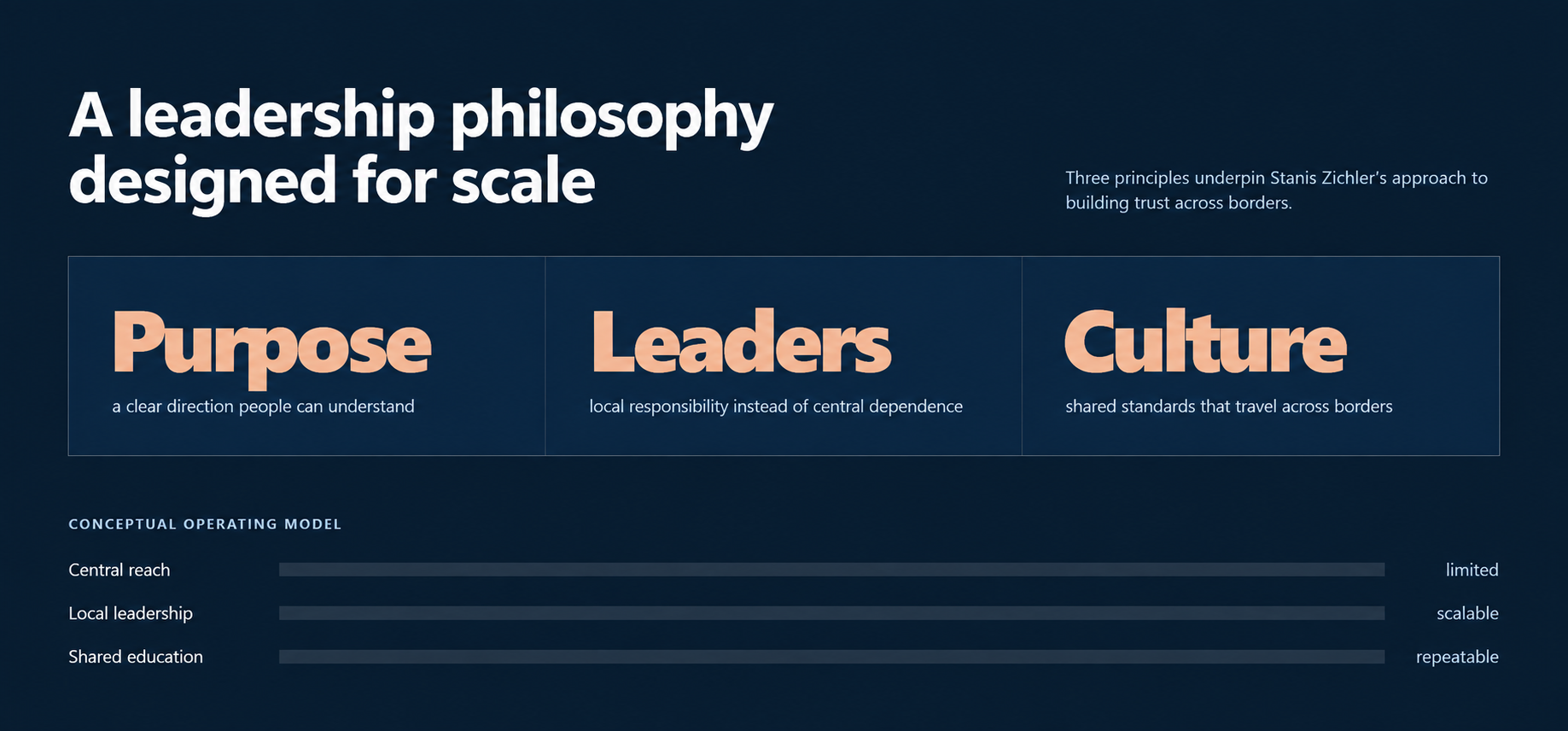
Zichler's philosophy begins with a distinction between reach and trust. Reach can be generated through platforms, content and campaigns. Trust develops when people encounter consistent standards, useful guidance and leaders who accept responsibility for the quality of local relationships.
That distinction matters whenever an idea crosses markets. A central figure can communicate the vision, but cannot personally sustain every relationship. Identity has to travel through capable leaders, recurring education, shared experiences and a culture strong enough to remain recognisable in different settings.
His public work therefore focuses on the infrastructure behind influence: how leaders are developed, how expectations are communicated and how communities move from attention to participation. This places Zichler's expertise in a wider business conversation about founder-led growth, international leadership and the systems required to build durable trust.
Culture is the real measure of
scale
Membership figures measure reach. They do not show whether a community is healthy. A stronger test is participation: how often members learn, contribute, support one another, create local activity and take responsibility without waiting for direction from the centre.
In a June 2026 interview with Founders Magazine , Zichler connected community growth with culture and belonging. Products and campaigns can attract attention, but a community becomes durable only when people understand what it stands for and can represent it consistently.
This is what makes community-led distribution a leadership discipline. The founder must create more than visibility. The founder must establish principles others can use, develop people who can apply them locally and build systems that preserve identity as the network expands.
From reach to responsibility
For Zichler, the next measure of progress is not reach alone. It is how credibly people across the network can carry the culture. That is the point at which a community becomes more than an audience. It becomes a distributed capacity to earn trust.